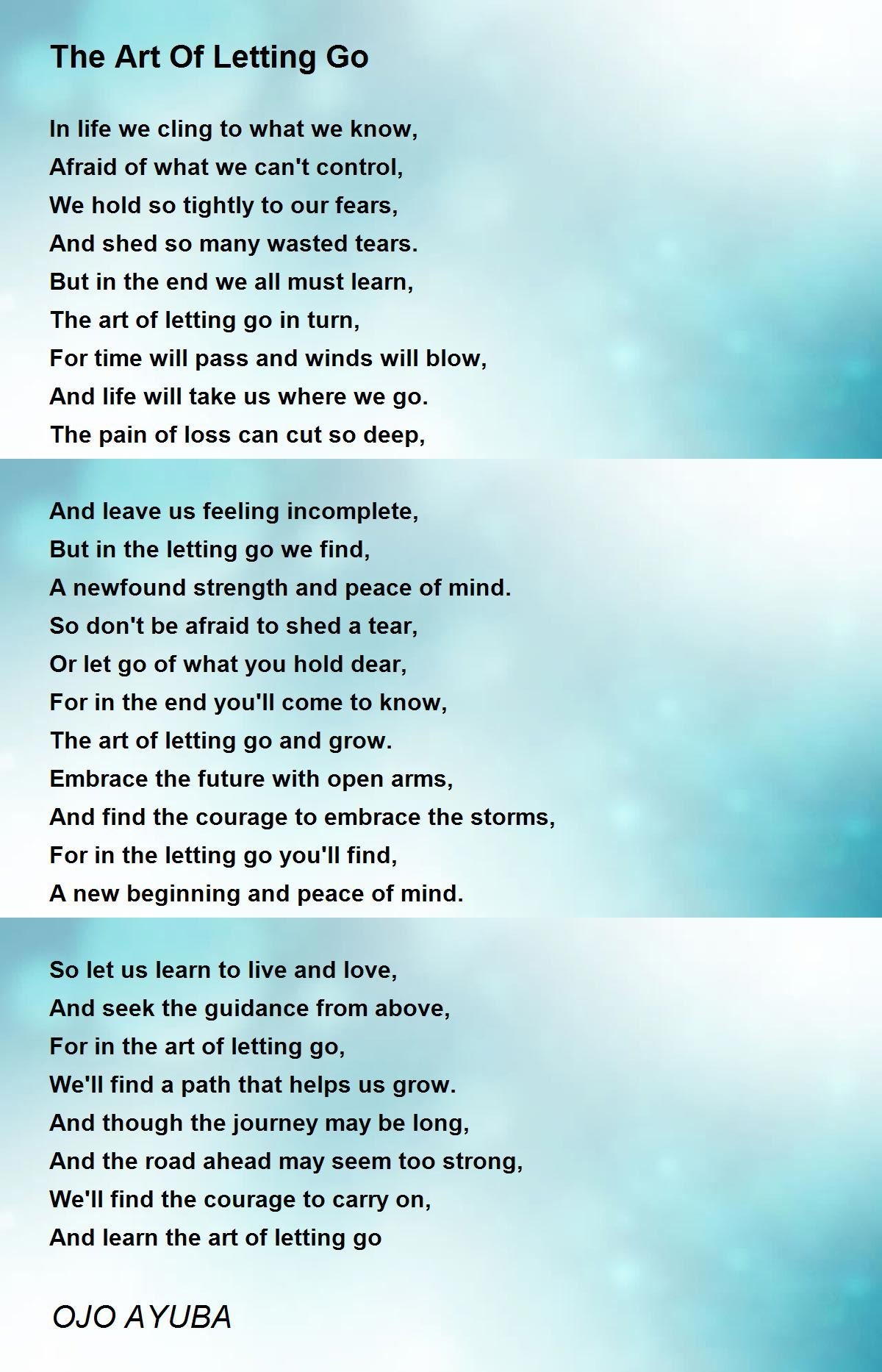
When life feels heavy, overwhelming, or stuck in an endless loop of "what ifs" and "if onlys," there's a profound, liberating practice waiting to be discovered: The Art Of Letting Go. It's not about apathy or giving up on what matters, but a deliberate, courageous act of releasing the grip on things that no longer serve your peace, growth, or well-being. Think of it as decluttering your mind and heart, making space for new possibilities and a lighter existence. This journey isn't always easy, but the freedom it offers is immeasurable.
At a glance: Your path to releasing the heavy
- Letting go is not giving up: It's about accepting what is and choosing peace.
- Identify your anchors: Pinpoint the thoughts, relationships, or situations you're clinging to.
- Embrace emotion, then release it: Acknowledge feelings without letting them control you.
- Reframe your perspective: See challenges as opportunities for growth.
- Mindfulness is your tool: Ground yourself in the present moment.
- Set healthy boundaries: Protect your energy and mental space.
- Focus on what you can control: Empower yourself where it truly matters.
- Practice makes perfect: Letting go is a skill that develops over time.
Why We Cling: Unpacking the Chains We Forge
Before we can master the art of releasing, it helps to understand why we hold on so tightly in the first place. We're wired for certainty, for control, and for maintaining the familiar, even when the familiar is painful. This deep-seated need often manifests in several ways:
- The Illusion of Control: We mistakenly believe that by obsessing over a past event or a future outcome, we can somehow alter it. Clinging gives us a false sense of power, a feeling that we're actively doing something, even if that something is self-destructive rumination.
- Fear of the Unknown: Stepping into the void left by letting go can feel terrifying. What if things get worse? What if we regret it? This fear often keeps us shackled to undesirable situations or outdated beliefs simply because they are predictable.
- Attachment to Identity: Our stories, our roles, our past experiences, and even our grievances often become intertwined with who we believe ourselves to be. Releasing them can feel like losing a piece of ourselves, a threat to our very identity.
- Unprocessed Emotions: Grief, anger, resentment, disappointment – these powerful emotions, when unaddressed, can manifest as clinging. We hold onto the pain because letting it go feels like condoning what happened or forgetting someone we loved.
- Hope (Misguided): Sometimes, we cling to a glimmer of hope that a person will change, a situation will resolve itself magically, or a past wrong will be righted. While hope can be a powerful motivator, when it becomes detached from reality, it can fuel prolonged suffering.
Understanding these underlying mechanisms isn't about self-criticism, but about compassionate self-awareness. It's the first step toward loosening the grip.
Letting Go Isn't Giving Up: Clarifying a Common Misconception
Many people confuse letting go with throwing in the towel, becoming indifferent, or simply abandoning responsibilities. This couldn't be further from the truth.
- It's not indifference; it's acceptance: Letting go doesn't mean you don't care. It means you accept reality as it is, not as you wish it were. You can still care deeply about a person or situation, but release your attachment to a specific outcome or your need to control it.
- It's not apathy; it's peace: True letting go allows you to engage with life from a place of serenity, rather than anxiety or resentment. You can still pursue goals, advocate for change, or love fiercely, but you do so without the constant internal struggle.
- It's not forgetting; it's releasing the hold: You don't erase memories or pretend past hurts didn't happen. Instead, you release the emotional charge, the anger, the pain that those memories continue to inflict. You integrate the experience as part of your story without letting it define or diminish your present joy.
- It's not weakness; it's immense strength: To consciously choose peace over prolonged suffering, to surrender to what you cannot change, and to redirect your energy toward what you can influence—that takes profound courage and inner fortitude.
The Foundation of Release: Embracing the Nature of Impermanence
At the heart of letting go lies a fundamental truth about existence: everything changes. Our lives are a constant flow of beginnings and endings, joys and sorrows, presence and absence. This isn't a pessimistic view but a deeply realistic and ultimately liberating one. Recognizing The nature of impermanence allows us to cultivate a healthier relationship with loss, transition, and the inevitable shifts that shape our journey.
When we understand that people, circumstances, and even our own feelings are constantly evolving, clinging seems less logical. It's like trying to hold onto water in your hands—the harder you grip, the faster it slips away. Releasing the need for things to stay the same opens us up to the beauty of the present moment and the exciting potential of the future. It helps us mourn what was without being trapped by it.
Your Toolkit for Letting Go: Practical Steps to Cultivate Release
This isn't a one-time event; it's a practice, a muscle you build over time. Here’s a roadmap to guide you:
1. Identify What You’re Clinging To (The Awareness Phase)
You can't let go of something if you don't know what it is. This step requires honest self-reflection.
- Tune into your discomfort: What thoughts or situations consistently make you feel anxious, angry, sad, or stuck?
- Journaling: Write freely about your worries, resentments, or attachments without judgment. "I'm holding onto the idea that...", "I can't let go of how things used to be with...", "I keep replaying the moment when..."
- Look for patterns: Do certain relationships, past events, or future anxieties dominate your mental landscape?
Example: "I'm clinging to the idea of what my career should have been by now, rather than appreciating the path I'm actually on."
2. Acknowledge and Feel Your Emotions (The Acceptance Phase)
Suppressing emotions is like pushing a beach ball underwater; it will always resurface. True letting go involves acknowledging the pain, anger, fear, or sadness that accompanies it.
- Create a safe space: Allow yourself to truly feel without judgment. This might mean crying, screaming into a pillow, or simply sitting with the discomfort.
- Name the emotion: "I feel immense sadness about this loss." "I'm angry about being wronged." Giving it a name can lessen its power.
- Practice self-compassion: Treat yourself with the same kindness and understanding you would offer a dear friend experiencing similar pain. Remind yourself that these feelings are valid.
Clarification: Feeling an emotion is different from dwelling on it. Feel it fully, then consciously begin to release its grip.
3. Reframe Your Narrative (The Perspective Shift)
Often, we're not just clinging to an event, but to the story we tell ourselves about that event. Changing the narrative can be incredibly powerful.
- Challenge assumptions: Are you interpreting a situation in the most negative light? What other perspectives are possible?
- Look for lessons: Even painful experiences offer insights. What have you learned about yourself, about others, or about life through this challenge?
- Focus on growth, not blame: Instead of "Why did this happen to me?" try "What can I learn from this, and how can I grow?"
Mini-example: Instead of "I failed that project," reframe it as "I gained valuable experience in problem-solving and learned what not to do next time."
4. Practice Mindfulness and Presence (The Anchor in Now)
Clinging often pulls us into the past or projects us anxiously into the future. Mindfulness brings us back to the only moment we ever truly have: now.
- Simple breathing exercises: When you feel yourself spiraling, focus purely on your breath. Inhale, exhale. Repeat. This grounds you.
- Engage your senses: Pay attention to the sights, sounds, smells, tastes, and textures of your immediate environment. Notice the warmth of your coffee cup, the sound of birds outside, the feel of your clothes.
- Mindful movement: Go for a walk, truly feeling your feet on the ground. Wash dishes, focusing on the water and the soap. Bring awareness to everyday activities.
By cultivating presence, you starve the mental loops of clinging and create space for new experiences.
5. Set Healthy Boundaries (The Protection Layer)
Sometimes, what we need to let go of is a toxic dynamic or an unhealthy expectation imposed by others (or ourselves). Boundaries are essential.
- Learn to say "no": Protect your time, energy, and peace by politely declining requests that drain you.
- Limit exposure: If a person or situation consistently triggers your clinging or pain, reduce your engagement. This might mean muting social media, limiting phone calls, or creating physical distance.
- Communicate your needs: Clearly articulate what you are and are not willing to accept in a relationship or situation.
Decision Criteria: Ask yourself, "Does this interaction or commitment add to my peace or detract from it?"
6. Focus on What You Can Control (The Empowerment Zone)
Many things are simply beyond our influence: other people's choices, past events, global circumstances. Wasting energy on these is futile. Redirect it.
- Distinguish control vs. concern: Draw a mental circle. Inside the circle are things you can directly influence (your reactions, effort, attitude). Outside are things you can only be concerned about.
- Take action where possible: If there's something you can do, do it. But if there isn't, consciously release the need to interfere or worry.
- Cultivate your inner world: Your thoughts, beliefs, and emotional responses are largely within your control. Focus on cultivating resilience and a positive mindset.
7. Rituals of Release (The Symbolic Act)
Sometimes, a symbolic act can help solidify your intention to let go, giving a tangible form to an intangible process.
- Write a letter: Pen a letter to the person, situation, or emotion you're letting go of. Express everything you need to say, then tear it up, burn it safely, or bury it.
- Balloon release: Write what you're releasing on a biodegradable balloon and watch it float away.
- Decluttering: Physically decluttering your space can mirror the mental decluttering you're doing. Donate items you're clinging to.
- Visualization: Close your eyes and imagine yourself physically holding what you're letting go of, then opening your hands and watching it gently float away.
Addressing Specific Clinging Scenarios
Letting go looks different depending on the situation.
Letting Go of Past Mistakes and Regrets
This often involves self-forgiveness. You cannot change the past, but you can change your relationship with it. Acknowledge what happened, learn from it, make amends if appropriate, and then forgive yourself for being human. Understand that regret, while sometimes a useful signal for future behavior, can also be a debilitating trap.
Letting Go of Resentment and Bitterness
Holding onto anger only poisons your own peace. This doesn't mean condoning harmful behavior; it means choosing your freedom over prolonged suffering. Forgiveness is often more for you than for the person who wronged you. It's a release from the emotional prison of holding onto the past.
Letting Go of Relationships (Past Loves, Toxic Friendships)
This is profoundly difficult because it touches on deep emotional attachment and often involves grief. Grieve the loss, yes. But then, consciously release the expectation that the person or relationship should be different. Accept the reality, learn the lessons, and open yourself to healthier connections.
Letting Go of Unmet Expectations
We often create elaborate mental blueprints for how life should unfold. When reality deviates, we suffer. Practice radical acceptance. Acknowledge your desires, but release your rigid attachment to them. Be flexible, adaptable, and open to the beauty of the unplanned. This is particularly important for expectations of others, as they are outside your control.
Common Questions and Misconceptions
"Isn't letting go selfish?"
No, it's self-preservation. You cannot pour from an empty cup. By releasing what drains you, you create capacity to be more present, loving, and effective in the areas you do choose to invest in. It allows you to engage with the world from a place of wholeness, not depletion.
"What if I regret letting go?"
Regret is a possibility, but often the regret of not letting go is far greater – the regret of years wasted in unhappiness, resentment, or stagnation. Trust your intuition. If a situation consistently brings you more pain than joy, the risk of regret for moving towards peace is often worth taking. The greatest regret is usually not living authentically.
"How long does it take to truly let go?"
There's no fixed timeline. It's a journey, not a destination. Some things release quickly; others might take months or even years of gentle, persistent effort. Be patient and compassionate with yourself. Each small act of release builds momentum.
"Does it mean I have to forget everything?"
Absolutely not. Letting go is about releasing the emotional charge and the grip a memory or situation has on your present, not erasing the memory itself. You can remember experiences, learn from them, and integrate them into your story without letting them define your suffering.
Pitfalls to Avoid on Your Journey
- Rushing the process: Don't force yourself to "get over it" prematurely. Allow space for emotions to be processed naturally.
- Mistaking apathy for letting go: Genuine letting go comes from a place of acceptance and peace, not a forced detachment or emotional numbness.
- Self-blame: Avoid blaming yourself for holding on or for the situation you're trying to release. This is a practice of compassion, not judgment.
- Expecting perfection: You won't always succeed immediately. There will be days you slip back into old patterns. That's okay. Gently redirect yourself.
- Isolating yourself: Talk to trusted friends, a therapist, or a spiritual advisor. Support makes the journey easier.
Living Freer: The Profound Impact of Letting Go
Imagine a life where you're not constantly burdened by what was or what might be. This is the promise of letting go. When you release the old, you create a vast, open space for the new:
- Greater Peace of Mind: Your mental landscape becomes calmer, less cluttered with worries and resentments.
- Enhanced Resilience: You become more adaptable to life's inevitable changes, bouncing back quicker from setbacks.
- Deeper Connections: By releasing past hurts, you can engage more fully and authentically in present relationships.
- Increased Energy: The emotional toll of clinging is immense. Releasing it frees up vital energy for joy, creativity, and purpose.
- New Opportunities: When you're not constantly looking backward, you're better able to see and seize the opportunities that arise.
- Authentic Self: You shed layers of identity that no longer serve you, revealing a truer, more courageous self.
The journey of letting go isn't about becoming indifferent; it's about becoming free. It's about choosing to live in the present, to embrace what is, and to step into your future with an open heart and a lighter spirit. It is, perhaps, one of the most powerful gifts you can give yourself.
Your Next Step: Begin with One Small Release
Don't feel overwhelmed by the entirety of this practice. Start small. Pick one minor thing you've been clinging to – a trivial resentment, an unrealistic expectation for your day, a small past regret. Acknowledge it, feel it, and consciously decide to release it.
It's a continuous journey, a gentle unfolding. Each time you consciously choose to let go, you strengthen that muscle, paving the way for profound peace and a life lived with greater freedom and joy. Your peace is worth it.